Billionaires’ Row refers to the ultra-prime residential corridor centered around West 57th Street near the southern edge of Central Park. It is home to some of Manhattan’s most ambitious condominium towers, including Central Park Tower, 111 West 57th Street, 220 Central Park South, and 432 Park Avenue. For buyers seeking trophy real estate, iconic skyline positioning, and protected Central Park views, Billionaires’ Row remains one of the most important ultra-luxury housing corridors in New York City.
Prices along Billionaires’ Row range from comparatively smaller entry units in the single-digit millions to full-floor residences and penthouses priced well above $100 million. The corridor attracts a mix of primary-home buyers, pied-à-terre purchasers, and global capital seeking privacy, permanence, and long-term positioning in Manhattan’s ultra-prime market.
Introduction to Luxury Living
The ultra-luxury building boom in New York City has redefined what it means to live at the pinnacle of sophistication. Nowhere is this transformation more evident than along Billionaires’ Row, the stretch of 57th Street that has become synonymous with some of the world’s most expensive apartments and breathtaking Central Park views. Billionaires’ Row is a group of ultra-luxury residential skyscrapers near Central Park in Midtown Manhattan. Here, developers have competed to build some of the city’s most iconic towers.
Central Park Tower, located at 217 West 57th Street, is the tallest residential building in the world at 1,550 feet, offering ultra-luxury apartments that can range from approximately $6 million to as high as $250 million. The southern edge of Central Park has evolved into a showcase for architectural innovation and opulent living, attracting billionaires and ultra-high-net-worth buyers from around the globe. These buildings are more than residences; they are symbols of status, privacy, and achievement, setting a new standard for luxury in Manhattan and beyond.
Why establish the West 57th Street area as Billionaires Row NYC?
From the 57th Street corridor, the higher one goes in these buildings, the more the views open into sweeping panoramas over Central Park and Manhattan. That visual advantage is one of the main reasons Billionaires’ Row became one of the most coveted luxury residential corridors in the world. Several buildings associated with Billionaires’ Row are taller than 1,000 feet and include some of the tallest residential towers on the planet.
The area is defined by ultra-expensive, ultra-luxury apartments that only a very small global buyer pool can afford, reinforcing the exclusivity of the corridor.
As explained in greater detail below, “as of right” zoning in this area made it much easier to develop supertall buildings here than in neighborhoods such as the Upper West Side or Upper East Side, where comparable projects are far more difficult. In addition, many of these slender towers were made possible by advances in engineering and construction technology, allowing developers to build dramatically taller structures on relatively narrow sites.
A key figure in this ultra-luxury building cycle is developer Gary Barnett, whose company Extell Development played a pivotal role in shaping the skyline with landmark projects such as One57 and Central Park Tower. Barnett’s vision and aggressive acquisition of air rights helped fuel the race among developers to build some of the tallest and most exclusive residential skyscrapers in New York City.
The proliferation of luxury developments on Billionaires’ Row has also influenced the broader Manhattan housing market, especially in conversations about affordability, land values, and the role of housing as a store of wealth.
Why Manhattan?
The Manhattan real estate market has a strong long-term historical track record in terms of price appreciation, resiliency, and global prestige. For these reasons, luxury condominiums on Billionaires’ Row are often used as real estate safe-deposit boxes by wealthy foreign and domestic buyers who want to keep large portions of their net worth outside of volatile stock markets and away from political or economic instability elsewhere.
Owners of these expensive apartments also pay substantial property taxes, common charges, and maintenance costs, all of which contribute meaningfully to the city’s tax base. While real estate markets do experience periodic corrections, many buyers at this level are focused on long-term capital preservation, scarcity, and location quality rather than short-term fluctuations.
Expect to pay significantly for these exclusive residences, especially those with direct, unobstructed Central Park views. Certain buildings, such as One57 and Central Park Tower, also have somewhat smaller units, creating a lower entry point for pied-à-terre buyers. Even so, the most desirable homes in the corridor remain among the most expensive in the world.
The addition of the Time Warner Center (now known as Deutsche Bank Center) at Columbus Circle in 2005 is perhaps where the seeds of Billionaires’ Row were planted. The two towers brought luxury residential buyers to the West Side of Manhattan in a more meaningful way, and the presence of the Mandarin Oriental helped elevate the neighborhood further.
Soon after, 15 Central Park West rose along Central Park West and became one of the most successful condominium buildings in New York City. It helped solidify the West Side as a place where affluent buyers wanted to be. With strong architecture, Central Park adjacency, and first-class amenities, these buildings drew extraordinary demand.
In the years that followed, developers raced to purchase air rights along 57th Street and nearby blocks, from Eighth Avenue to Park Avenue, to take advantage of “as of right” parcels. As long as developers controlled enough air rights, they could build to exceptional heights. Over time, a cluster of towers emerged and came to define what is now called Billionaires’ Row.
One57 by Extell was among the first supertall residential towers completed on 57th Street between Sixth and Seventh Avenues. The 1,050-foot tower opened with the Park Hyatt Hotel in its base and helped establish the modern identity of the corridor. Early demand came heavily from foreign buyers, but as more inventory came online, affluent domestic buyers were increasingly drawn to these projects as well.
To receive a more complete analysis of each building, please reach out to us directly.
The Neighborhood
Billionaires’ Row NYC is nestled in a neighborhood that combines prestige, convenience, and global recognition. Residents enjoy immediate access to some of New York’s finest restaurants, designer boutiques, and cultural institutions, all within walking distance. The allure of Central Park is ever-present, with many apartments on higher floors offering sweeping, unobstructed views of the city’s most famous green space.
This neighborhood has become a magnet for high-net-worth buyers seeking the ultimate in luxury, privacy, and service. Many of the skyscrapers in the area offer 24-hour concierge service, private dining, wellness facilities, and elevated security measures, making the neighborhood a coveted address for those who want the best of Manhattan living.
Community and Culture
Life on Billionaires’ Row is shaped by global wealth, privacy, and ultra-prime real estate ownership. The community includes billionaires and ultra-wealthy individuals from around the world, many of whom purchase apartments through limited liability structures for privacy, estate planning, or investment purposes. This has also made Billionaires’ Row part of broader conversations about wealth, capital flows, and the role of New York real estate in global finance.
Despite those debates, the area remains renowned for its luxury and prestige. Residents enjoy access to world-class services, private amenities, and a vibrant cultural environment that includes museums, galleries, and performance venues. The result is a highly sophisticated residential enclave in the heart of Manhattan.
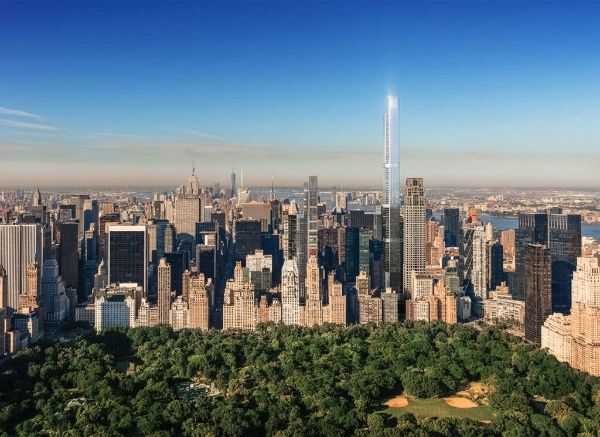
Central Park Tower
The Tallest Residential Building in the World
Address: 217 West 57th Street, New York, NY
The tallest residential building in the world, standing at 1,550 feet tall, Central Park Tower rises at Broadway between 57th and 58th Streets and offers extraordinary views of Central Park and the Manhattan skyline.
Adrian Smith + Gordon Gill Architecture, the firm behind the Burj Khalifa, designed the tower. Extell tapped Rottet Studio, known for designing interiors for brands such as St. Regis, Four Seasons, and Langham, to shape the interiors.
Extell applied lessons learned from developing One57 to Central Park Tower. One major advantage is the Central Park Club, which gives residents access to extensive private amenity space, including entertaining areas, dining, and outdoor pool access.
Central Park Tower surpassed 432 Park Avenue as the tallest residential building in the Western Hemisphere. Pricing ranges widely depending on floor, layout, and view, with the highest homes reaching the very top tier of the Manhattan market.
The Central Park Tower apartment cost depends heavily on elevation, exposure, and layout. In Manhattan, height and views have an enormous impact on pricing.
111 West 57 Street
The World's Skinniest Skyscraper
Address: 111 West 57th Street, New York, NY
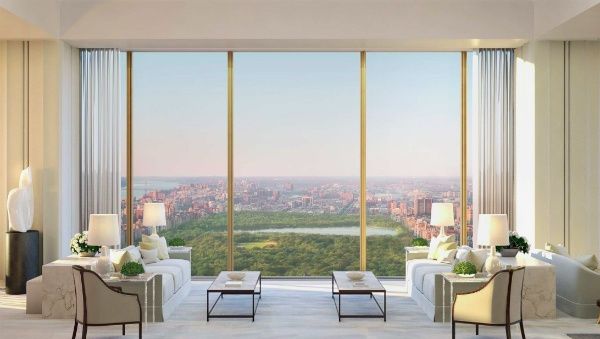
The world’s skinniest skyscraper, 111 West 57th Street, rises 1,428 feet above the restored Steinway & Sons building and is one of New York City’s most distinctive residential towers. The views are especially dramatic because the tower aligns beautifully with Central Park.
The full-floor and duplex concept makes the building exceptionally exclusive, with very few residences per floor in the tower portion. The building’s terra-cotta and bronze façade by SHoP Architects is unique, while interiors by Studio Sofield are among the most refined on the corridor.
Prices for residences with unobstructed Central Park views are among the highest in the building, while lower and non-park-facing homes provide somewhat more accessible entry points.
220 Central Park South
The Most Expensive Condo Building in NYC
Address: 220 Central Park South, New York, NY
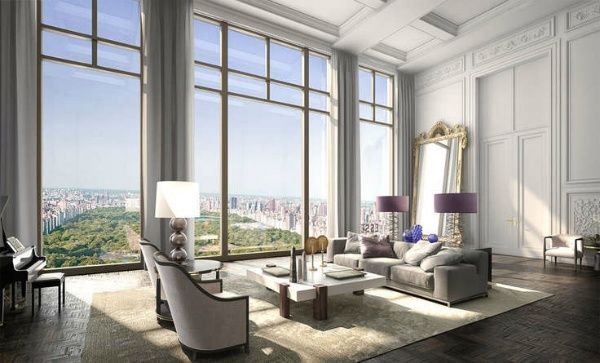
Set along Central Park South between Seventh Avenue and Broadway, 220 Central Park South is one of the most successful developments in the corridor. Developed by Vornado and designed by Robert A. M. Stern, it has some of the strongest architectural DNA in the market, along with protected park frontage in many orientations.
It shares certain qualities with 15 Central Park West, though in a more slender and taller format. Its limestone façade, classical expression, and exceptional location have made it one of the most desirable addresses in Manhattan.
432 Park Avenue
The Only Building in NYC Inspired by the Perfect Square
Address: 432 Park Avenue, New York, NY
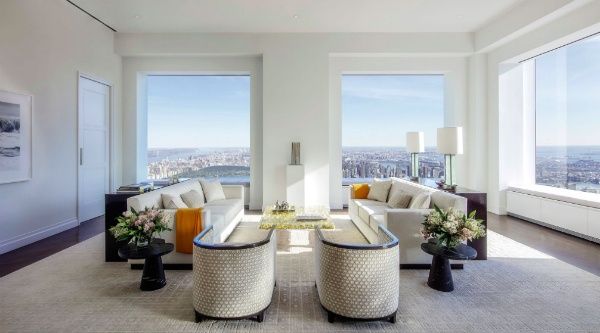
One of the tallest residential buildings in New York, 432 Park rises 1,398 feet and sits between 56th and 57th Streets near Park and Madison Avenues. It is one of the defining towers of Manhattan’s ultra-prime market.
Architect Rafael Viñoly designed the building around the geometry of the perfect square, which shaped the floor plate, windows, and overall expression of the tower. Ceiling heights are dramatic, and the building’s mechanical openings help reduce sway from wind.
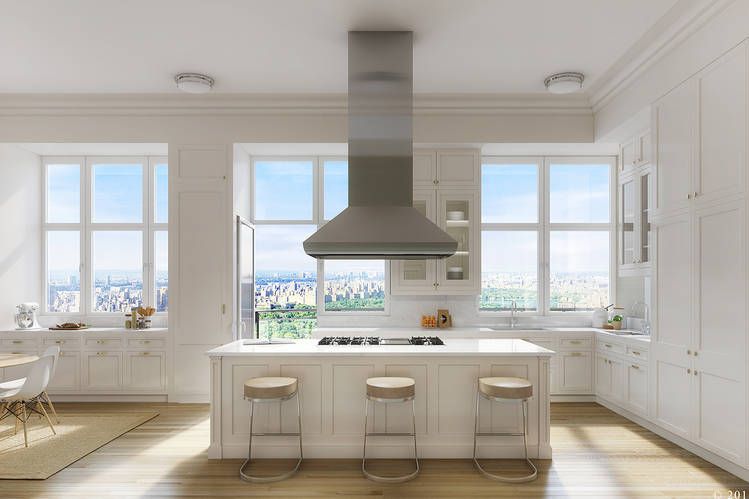
With very large floor plates, 432 Park is home to some of the most significant trophy residences in Manhattan. Residents also benefit from a strong amenity offering without a hotel component, which many buyers prefer.
520 Park Avenue
One of the Best Addresses in NYC
Address: 520 Park Avenue, New York, NY
520 Park Avenue was developed by the Zeckendorfs, the same team behind 15 Central Park West, 18 Gramercy Park, and 50 United Nations Plaza. With only 31 units and a more intimate scale than some of the corridor’s supertalls, it offers a different form of exclusivity.
Located on East 60th Street between Park and Madison Avenues, it benefits from being in a lower-rise neighborhood while still offering strong views and access to Central Park. Designed by Robert A. M. Stern, the building draws on the vocabulary of classic New York apartment houses while delivering modern luxury layouts.
One 57
The Building that Started Billionaires Row
Address: 157 West 57th Street, New York, NY
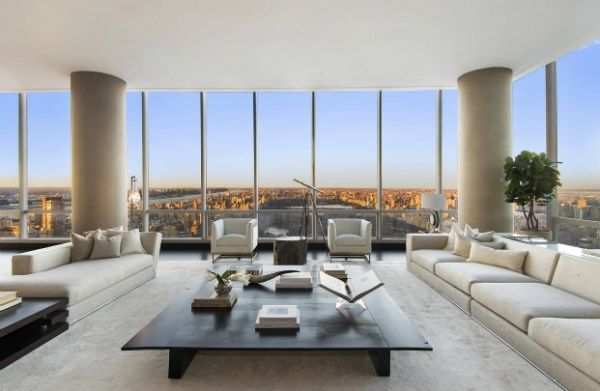
Billionaires’ Row likely would not have developed the way it did without Extell’s success with One57. The construction of One57 marked the beginning of the modern era of supertall ultra-luxury residential development along the corridor. It was also the first building in New York City to approach the $100 million sale threshold in a major way.
Designed by Christian de Portzamparc, the building rises approximately 1,050 feet and includes the Park Hyatt Hotel in its base. The residences are known for strong views, refined interiors, and hotel-style service.
In addition to the building’s own amenities, residents may access hotel services such as room service, housekeeping, dry cleaning, and laundry support.
53 W53 (at MoMa)
Jean Nouvel's Avant-Garde Masterpiece with an Exoskeleton
Address: 53 West 53rd Street, New York, NY
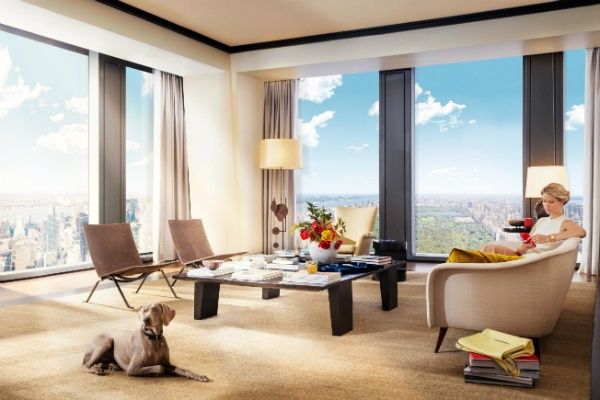
53 West 53 rises 1,050 feet into the New York skyline. While not directly on Billionaires’ Row, it is often discussed alongside the corridor because it targets a similar ultra-luxury buyer profile.
Jean Nouvel’s design is highly distinctive, with a dramatic taper and exposed structural expression. Interiors by Thierry Despont bring warmth and refinement to a highly architectural product. For buyers who want a more design-driven alternative to some of the corridor’s other trophy towers, 53 W53 stands out.
Aman New York Residences
Unique Aman Experience in an Urban Sanctuary
Address: 730 Fifth Avenue, New York, NY
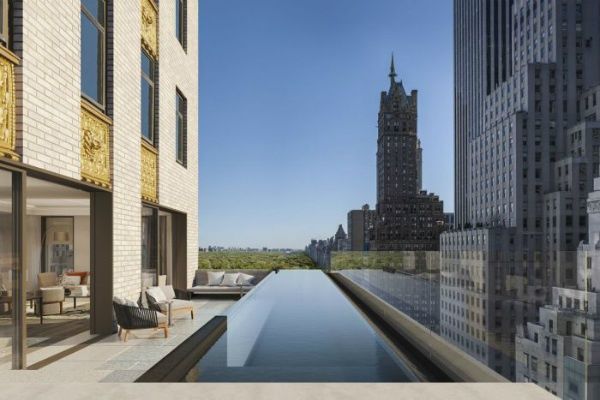
While not a supertall like some of the other buildings discussed here, Aman New York Residences occupies a highly strategic location at the intersection of Fifth Avenue and 57th Street. Set atop the historic Crown Building, it brings Aman’s hospitality brand into the Manhattan ultra-prime market with a very limited residential offering.
The project combines ultra-exclusive residences with Aman hotel services below, creating a distinct product for buyers prioritizing privacy, brand, and hotel-caliber execution.
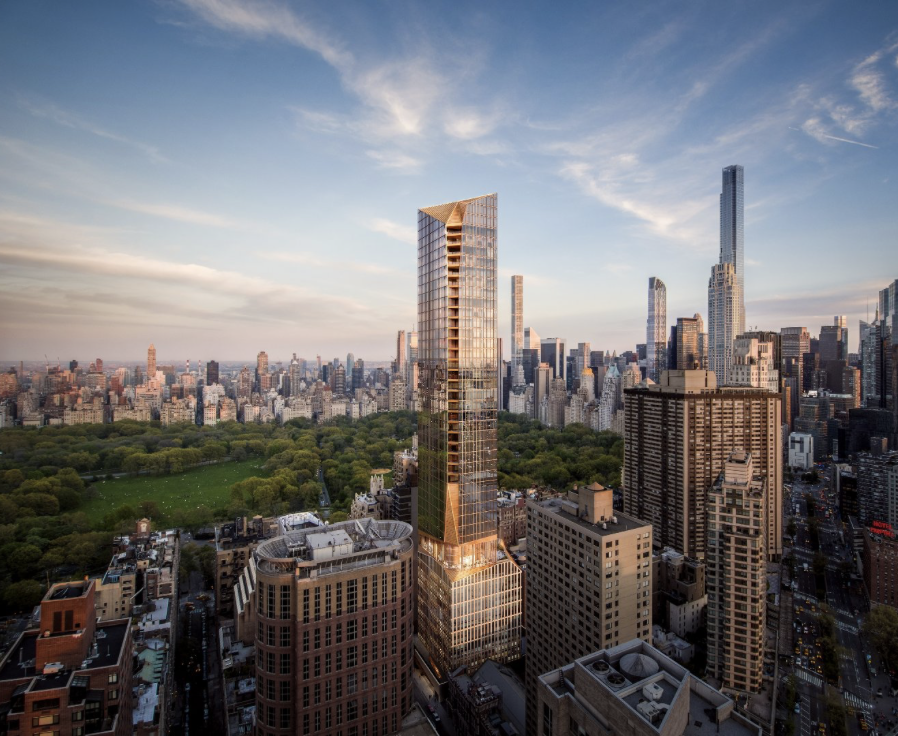
50 West 66th Street
The New Kid on the Block - with Loggias Overlooking Central Park and Super Tall Ceiling Heights
Address: 50 West 66th Street
While not exactly on the traditional Billionaires’ Row blocks, this building sits several blocks north along Central Park West in the Upper West Side. Its appeal lies partly in offering a more residential neighborhood context than many Midtown towers.
Developed by Extell, 50 West 66th Street brings together strong architecture, high-end finishes, notable ceiling heights, and loggias in select residences with compelling park exposure.
Pipeline - The Northward Expansion of Billionaires’ Row
While Billionaires’ Row is traditionally defined by West 57th Street, the next phase of ultra-luxury development appears to be moving north and east. A series of planned and emerging projects along Madison Avenue and the Upper West Side suggests that the corridor is expanding both geographically and in pricing power.
These developments are not formally part of Billionaires’ Row, but they compete for the same global buyer pool and, in many cases, may offer comparable scale, views, and prestige.
625 Madison Avenue (Extell)
Located between 58th and 59th Streets, 625 Madison Avenue is expected to become a major luxury development site that could materially affect the next stage of Manhattan’s ultra-prime residential landscape.
Given its location, any major tower there would likely compete with existing Billionaires’ Row inventory while benefiting from proximity to Central Park and Midtown’s luxury infrastructure.
655 Madison Avenue (Related)
Farther north, 655 Madison Avenue represents another major opportunity within the expanding ultra-luxury corridor. Depending on final design, height, and use mix, it could strengthen Madison Avenue’s role as an extension of Billionaires’ Row.
77 W66th Street @ Columbus Avenue (Extell)
On the Upper West Side, the former Disney headquarters site at West 66th Street and Columbus Avenue is widely viewed as one of the most important long-term redevelopment opportunities near Central Park. If ultimately built to significant height, it could create a new ultra-luxury node west of the park.
How to Buy a Billionaires Row Apartment
Having lived in the Columbus Circle neighborhood since 2007, we have watched these buildings reshape the skyline in real time. They may all sit within the same broad ultra-luxury category, but there are meaningful differences between them in architecture, layout, view protection, service, buyer profile, and long-term competitive positioning.
Buying on Billionaires’ Row is not simply about choosing the highest floor or the flashiest building. It requires understanding the nuances between residences, the quality of each product, and what future supply may compete with it.
Following the success of Billionaires’ Row in NYC, Miami has also pursued its own version of the ultra-prime coastal corridor with the emergence of Billionaires Beach in South Beach.
Central Park South Luxury
Central Park South stands as one of the crown jewels of New York’s ultra-luxury market, where the southern edge of Central Park has become home to some of the most exclusive apartments in the city. Legendary addresses such as Central Park Tower and 220 Central Park South have helped define this micro-market and attract buyers from around the world.
The appeal is clear: exceptional views, iconic architecture, extraordinary service, and immediate access to Central Park, Fifth Avenue, and Midtown’s cultural core. For buyers seeking trophy real estate in Manhattan, Central Park South remains one of the most important addresses in the city.
What is Billionaires’ Row in NYC?
Billionaires’ Row generally refers to the ultra-luxury residential corridor centered around West 57th Street near the southern edge of Central Park. It includes several of Manhattan’s most prominent supertall condominium towers and is associated with some of the highest residential prices in New York City.
Where is Billionaires’ Row located?
The core of Billionaires’ Row is along West 57th Street in Midtown Manhattan, especially between roughly Sixth Avenue and Park Avenue, with nearby Central Park South and adjacent ultra-prime buildings often included in the broader conversation.
What kind of apartments are on Billionaires’ Row?
The corridor includes full-floor residences, duplexes, penthouses, and smaller entry units in ultra-luxury condominium buildings. Buyers are paying for height, views, privacy, service, and architectural pedigree.
Why are Billionaires’ Row buildings so tall and slender?
A combination of zoning, assembled air rights, land scarcity, engineering advances, and intense competition for Central Park views helped produce the supertall, slender towers that define the corridor today.
Who buys on Billionaires’ Row?
Typical buyers include ultra-high-net-worth individuals, global investors, pied-à-terre purchasers, and primary-home buyers seeking trophy real estate in one of the world’s most recognized luxury housing markets.
Frequently Asked Questions About Billionaires Row
What is the cheapest apartment on Billionaires Row? Entry-level apartments in these towers can begin in the single-digit millions depending on building, unit size, floor, and exposure. However, the more typical price point for prime inventory is materially higher.
What is the tallest building on Billionaires Row? Central Park Tower at 217 West 57th Street is the tallest residential building in the world at 1,550 feet, surpassing 432 Park Avenue and 111 West 57th Street.
Where exactly is Billionaires Row in NYC? It's centered along 57th Street in Midtown Manhattan near the southern edge of Central Park, with nearby Central Park South and adjacent ultra-prime towers often included in the broader definition.
Why are the buildings on Billionaires Row so tall and thin? The area’s zoning, combined with transferable air rights and advances in engineering, made it possible to build exceptionally tall and slender towers on relatively narrow sites.
What is the most expensive apartment ever sold on Billionaires Row? The corridor has produced some of the most expensive residential sales in U.S. history, including record-setting transactions at 220 Central Park South.
Explore More Luxury Real Estate
Discover more of Manhattan's finest properties and luxury real estate opportunities:
NYC Penthouses Billionaires Row
Many of Manhattan's most extraordinary penthouses are located on Billionaires Row, including residences at 432 Park Avenue, Central Park Tower, and One57. These crown jewels of luxury living offer unobstructed Central Park views and world-class amenities.
Explore the Top 50 NYC Penthouses for Sale →

-2.png?width=500&height=205&name=MIAMI%20HOME%20SEARCH%20(2)-2.png "MIAMI HOME SEARCH (2)-2")








START YOUR SEARCH NOW