Hudson Yards apartments are defined by:
Hudson Yards is one of the few Manhattan neighborhoods built entirely in the 21st century, offering a level of modern infrastructure and building technology unavailable in older neighborhoods.
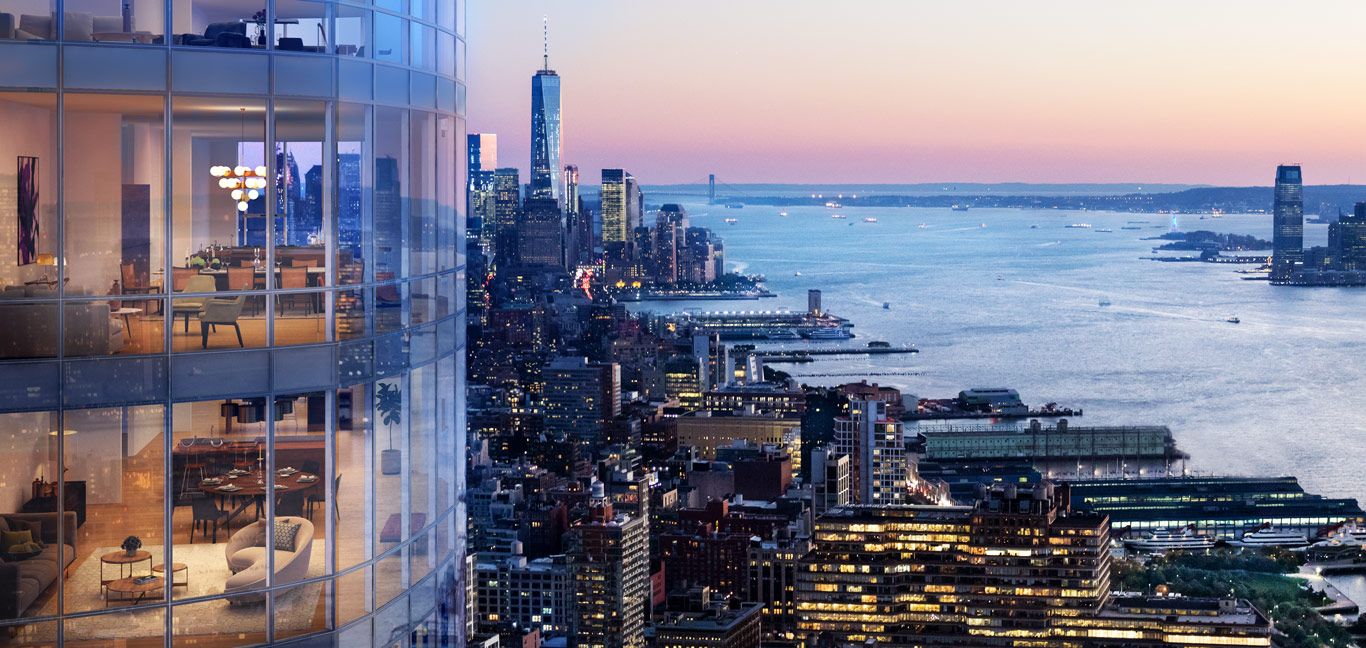
A luxury condominium tower designed by Diller Scofidio + Renfro with expansive Hudson River and city views, high-end finishes by March & White, and a comprehensive amenity suite including a 75-foot sky-lit swimming pool, private IMAX theater, and direct access to The High Line.
A mixed-use tower combining Equinox Hotel services with residential luxury, offering one of the most comprehensive amenity packages in Manhattan. Residents have access to hotel-grade services, a full Equinox fitness club, spa, and outdoor pool terrace with skyline views.
Buyers often evaluate these buildings based on layout, views, and amenity offerings rather than location differences within the neighborhood.
The buildings below represent some of the most sought-after properties in the neighborhood, often setting pricing benchmarks for the market.
Availability at this level is limited and may include off-market opportunities.
Buyers evaluating this neighborhood typically compare a small number of buildings rather than the entire market.
Purchasing in Hudson Yards often involves:
In many cases, differences between buildings are driven more by amenities, views, and service levels than by neighborhood factors.
Penthouse at 35 Hudson Yards âÃÂà$22,500,000
4 bedrooms · 5,200+ sq ft · full-floor
Full-floor penthouse with 360-degree views, private terrace, and access to Equinox Hotel amenities including spa, pool, and dedicated concierge.
Corner Residence at 15 Hudson Yards âÃÂà$8,750,000
3 bedrooms · 2,800+ sq ft · river views
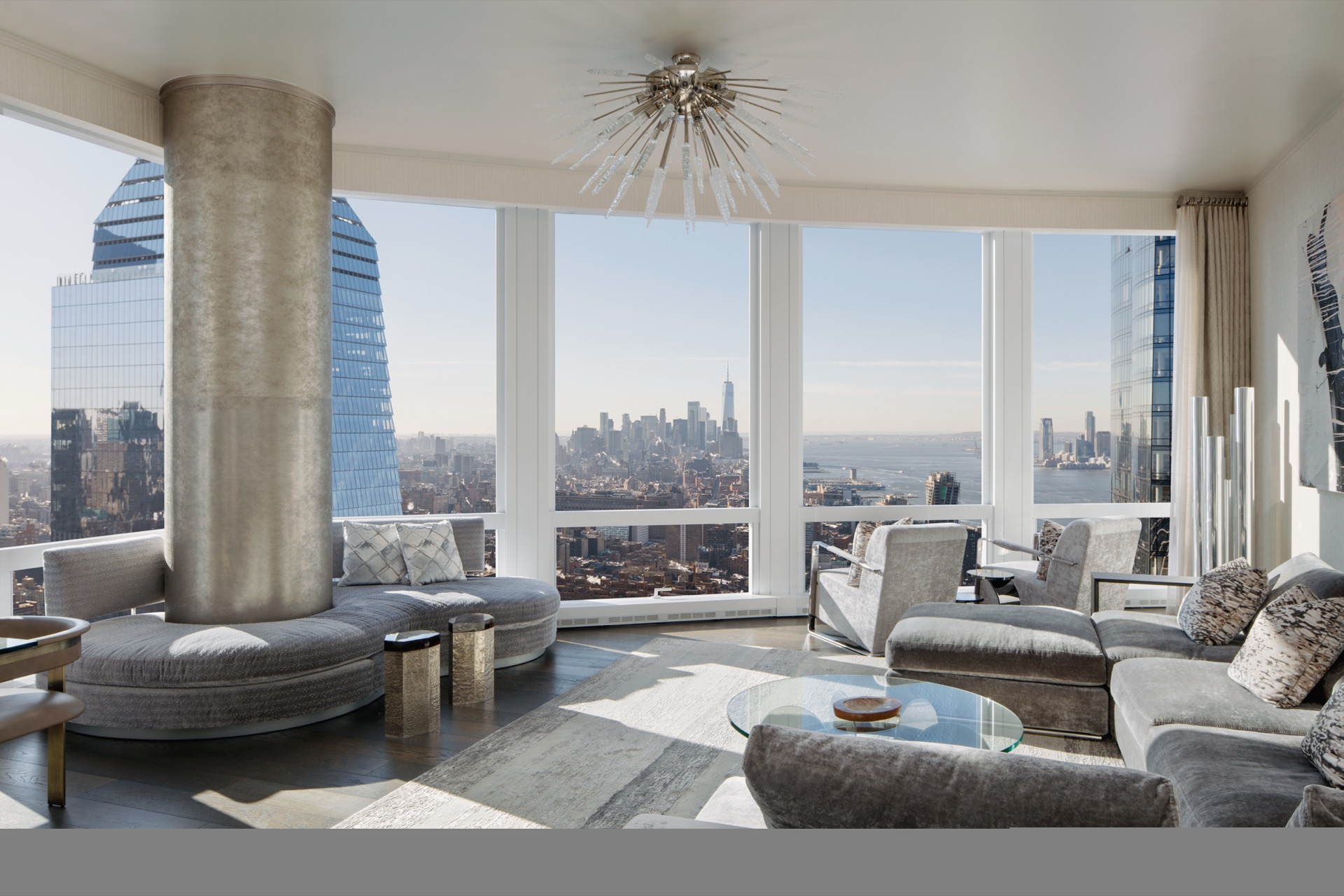
High-floor corner unit with unobstructed Hudson River views, chef's kitchen, and direct access to The High Line and Hudson Yards public spaces.
Duplex at 15 Hudson Yards âÃÂà$15,000,000
4 bedrooms · duplex · 4,100+ sq ft
Double-height living room with floor-to-ceiling glass, private staircase, and a layout designed for both entertaining and family living.
Availability at this level is limited and may include off-market opportunities.
This market attracts a significant global buyer base, including investors from Europe, Latin America, the Middle East, and Asia seeking stable, dollar-denominated assets. Many transactions are completed in cash, with buyers using New York real estate as both a long-term investment and a secondary residence.
Prices are typically quoted in US dollars, with international buyers often evaluating value on a price-per-square-foot basis compared to global luxury markets such as London, Paris, and Dubai.
International buyers can explore our Foreign Buyer's Guide to U.S. Real Estate for tax, legal, and ownership considerations.
Some buyers evaluating Hudson Yards also compare Miami developments when considering:
Compare NYC vs Miami Closing Costs | NYC to Miami Tax Migration Guide
Some of the most sought-after opportunities in these buildings are not publicly listed. Advisory clients receive access to off-market inventory and pre-market opportunities.
We advise buyers across New York City and Miami on property selection, building strategy, and cross-market planning.
REQUEST A PRIVATE ADVISORY CONSULTATION
Yes. Hudson Yards is almost entirely condominium inventory. Unlike older Manhattan neighborhoods dominated by co-ops, Hudson Yards offers the flexibility and ownership structure that appeals to international buyers and investors.
Typically $2,000 to $3,500+ per square foot depending on building, floor height, and views. Premium units in 15 and 35 Hudson Yards can exceed $4,000 per square foot.
Both 15 Hudson Yards and 35 Hudson Yards are considered top-tier. 15 HY appeals to buyers seeking a pure residential experience with High Line access, while 35 HY offers hotel-integrated services through Equinox. The choice often depends on lifestyle priorities.
Hudson Yards benefits from modern construction, strong amenity packages, and continued neighborhood development. Long-term value is supported by the area's connectivity, corporate tenancy, and limited competing new supply on Manhattan's West Side.